“The infusion of the middle class into the labor movement means a shifting sense of where social change is most desperately needed. What hasn’t changed is that unions are an effective tool for changing priorities.”
AFSCME Local 965 Arkansas President Bret Schulte, a career reporter currently an associate professor with the University of Arkansas School of Journalism and Strategic Media, published an article April 12, 2019, on the future of unions in the respected online news publication Slate.com.
In his research, Schulte found, “more than 1 million professionals have joined unions in the past two decades, reaching an all-time high in 2018 of 6.18 million. The numbers of their blue-collar brethren, meanwhile, have plummeted by 3 million over the same period, according to numbers provided by the AFL-CIO.”
This is a straightforward news story with some analysis, not an opinion piece. It’s just under 2,000 words. Schulte uses transparency, noting in a paragraph mid-piece his union and professional affiliations.
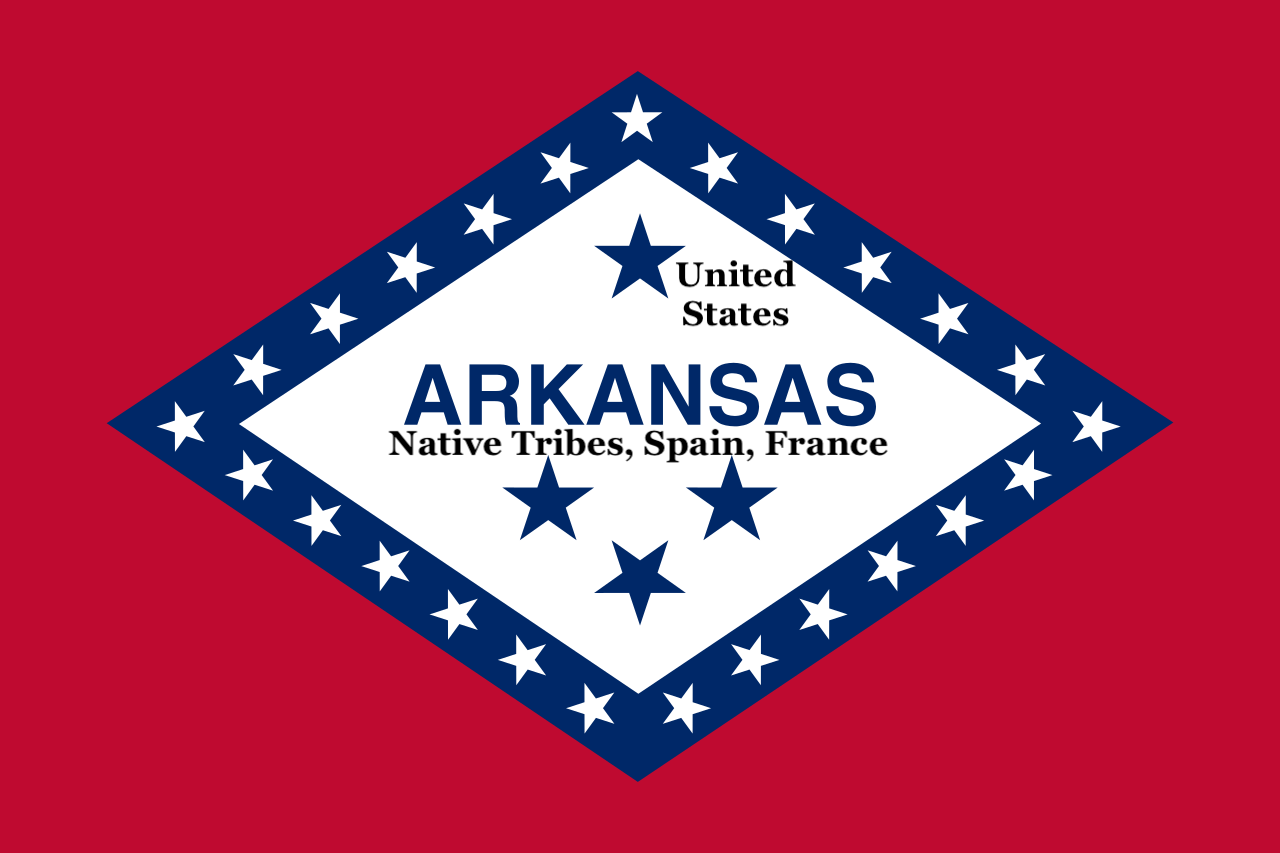
The symbolism of the four blue stars on Arkansas flag is explained.
It’s been embarrassing.
The state flag of Arkansas includes an explicit reference to the Confederacy. The overall design can be seen as having similarities to the Confederate battle flag of the American Civil War. The early 20th-century legislation establishing the banner sets four large blue stars within the diamond to refer to the nations to which Arkansas has belonged: a triangle indicating Spain, France and the United States, and separately and uppermost the Confederacy.
During the 2019 General Session of the Arkansas Legislature, a Democratic Little Rock representative proposed dropping the Confederate reference and making a star symbolize the indigenous tribes that dwelled here before the European conquests. It was twice defeated in committee.
Why take the state’s word on such a matter? Why not as citizens proclaim the four blue stars be both inclusive and accurate? This detail might not make a sanctioned state history textbook, but a nongovernmental group could promote an alternative symbolism in defiance of accepted and prejudicial dogma.
Local 965 of the American Federation of State, County and Municipal Employees approved such a resolution March 28, 2019. The rationale is that nearly all Local members are directly and indirectly workers in education. A modern flag is a teaching device, presenting facts and concepts. Educators have a vested interest in symbols that we use to impart knowledge and values.
Star Crossed: A Symbolic Act of Civil Disobedience
That Local 965, AFSCME, promote a fair and historically accurate representation of the official Arkansas State Flag.
Since 1923, the Arkansas Legislature has held that its fourth, separate blue star signifies the state’s membership in the Confederacy, the other three blue stars in place from 1913-1923 represent the nations having held the territory from which Arkansas was carved — Spain, France and since 1803 the United States. (Reference)
The four-year Confederacy being considered a sovereign state comparable to the Republic, not to mention European nations, pales in comparison to how indigenous tribes dwelled in the region for centuries before, primarily the Quapaw, Osage and Caddo. (Reference)
In 2019, the honorable state Rep. Charles Blake, D-Little Rock, lost several legislative moves to repurpose that fourth star to represent Native Americans. The top star would mean the U.S. and the lower three the previous sovereignties. We endorse that representation.
We workers, standing for the people of Arkansas, proclaim that our state Legislature has limited authority to embarrass us. If anyone asks, and even if they don’t, we will loudly and proudly state our heritage from the dawn of recorded history as represented in the central four blue stars within the diamond of the banner. If state authorities beg to differ, well tough.
— Resolution text drafted by Ben Pollock, the 965’s recording secretary and communication director
As many of you know, Arkansas state Sen. Bob Ballinger, R-Berryville, and his House counterpart Rep. Frances Cavenaugh, R-Walnut Ridge, have submitted a bill that would largely dismantle the minimum-wage increase just passed by more than two-thirds of Arkansas voters.
Greg Leding says legislators in Little Rocks are hearing a lot of support for Ballinger’s bill from business interests but nothing but crickets from people who voted for the minimum wage act. We need to send emails or make phone calls — and encourage others to do the same. If there was ever a day to call for social justice, MLK Day is it.
Ballinger’s Senate Bill 115 erases the minimum-wage increase that two-thirds of Arkansans voted for in the November 2018 General Election for anyone under 18, as well as anyone employed at a school, preschool, college, nonprofit or business with fewer than 50 employees. Attorney David Couch, who wrote the minimum wage ballot initiative, estimates that the bill could steal increases in pay for as many as half of the state’s minimum-wage employees.
Please contact your representatives, Democratic or Republican, as well as Senate Majority Leader Jim Hendren to let them you know support the minimum wage increase and oppose Republican efforts to undermine Arkansas voters and keep Arkansas workers in poverty.
Here’s contact information for Republicans and local Democrats who are defending the minimum wage. The Dems need to be able to say they’re hearing from supporters.
The Local 965 is pleased to announce that University of Arkansas Transit and Parking will now consider a salary-based fee structure to park on campus, a mark of progress for the UA Living Wage campaign. If approved, the innovative salary-based fee structure would charge each faculty and staff member a small percentage of his/her salary to park on campus.
Charging a percentage of a salary will make parking more affordable for workers at the university, where the median annual salary for classified employees is just $31,000. Nearly 400 full-time employees make less than $25,000 per year — data gathered by a state Freedom of Information Act (FOIA) request issued by the Local 965.
Since April, the Local has waged a Living Wage campaign to persuade the university to increase wages for its lowest level workers. We believe that making parking more affordable for employees would be an important demonstration of the university’s commitment to fairness, innovation and workers rights.
The consideration of a new parking structure comes after a presentation and proposal in November to the Transit and Parking Committee by Local 965 President Bret Schulte after consultation with the Local 965.
A handful of universities have already deployed similar fee structures. The University of Illinois charges employees 0.7 percent of salaries for parking, while Rutgers charges 0.001 percent. LeHigh and Towson have adopted tier systems for multiple levels of salaries. The University of Vermont has adopted a hybrid zone and salary system that charges employees a higher percentage of their salaries to park in premium zones.
The Local encourages members, faculty and staff to send their expressions of support for a salary-based fee structure to U of A Transit and Parking director Gary Smith, garys@uark.edu.
The January meeting of Local 965 will include discussion of the parking issue. That’s at 5:30 p.m. Thursday, Jan. 24, at Columbus House Brewery & Tap Room, 701 W. North St. in Fayetteville.
The Arkansas federation of the American Federation of Labor and Congress of Industrial Organizations (AFL-CIO) has announced after research and deliberation its endorsements in races of the November 2018 general election.
As one of the state AFL-CIO’s 190-plus local unions, labor councils and subordinate bodies, AFSCME Local 965 concurs. Arkansas workers should consider these recommendations as well as conduct their own study of candidates and policies before heading to the polls. We want all to vote!
The election is Tuesday, Nov. 6, early voting begins Oct. 22 and registration for new voters ends Oct. 9. Arkansas citizens should review those details.
As Arkansas 965 covers nine northwest and north central counties plus some employees of the University of Arkansas for Medical Sciences in Little Rock, all the recommended candidates and issues are listed.
U.S. House
Chintan Desai — 1st Congressional District
Clarke Tucker — 2nd Congressional District
Joshua Mahony — 3rd Congressional District
Hayden Shamel — 4th Congressional District
State Constitutional Offices
Jared Henderson — Governor
Anthony Bland — Lieutenant Governor
Mike Lee — Attorney General
Susan Inman — Secretary of State
Legislatively Referred Constitutional Amendments
Issue 1 — Tort Law — AFL-CIO position — Oppose
Issue 2: Voter ID — No Position
Citizen Initiated Constitutional Amendments
State Legislative Term Limits — AFL-CIO position — Oppose
Casino Initiative Amendment — Support
Citizen Initiated State Statute
Minimum Wage Increase Initiative — AFL-CIO position — Support
State Senate
Jon Comstock — 3rd Senate District
Rep. Greg Leding — 4th District
Jim Wallace — 5th District
Sen. Bill Sample — 14th District
Melissa Fults — 33rd District
Maureen Skinner — 35th District
State House
Rep. Vivian Flowers — 17th House District
Alan Hughes — 26th District
Dustin Parsons — 28th District
Rep. Fred Allen — 30th District
Randy Haun — 31st District
Jess Mallett — 32nd District
Andrew Collins — 35th District
Chase Mangiapane — 38th District
Monica Ball — 39th District
Jonathan Crossley — 41st District
Rep. Michael John Gray — 47th Distict
Michael Roetzel — 65th District
Luke Pruitt — 77th District
Jay Richardson — 78th District
Lou Reed Sharp — 80th District
Donald McKinney — 81st District
Denise Garner — 84th District
Nicole Clowney — 86th District
Kelly Scott Unger — 87th District
Megan Godfrey — 89th District
Kati McFarlane — 90th District
Chris Birch — 92nd District
Gayatri Agnew — 93rd District
Jene Huffman Gilreath — 94th District
Celeste Williams — 95th District
Christie Craig — 96th District
Gary Morris — 97th District
The Arkansas AFL-CIO was chartered in 1956. It was the first in the nation to merge the AFL and CIO into one state central body, according to its website. The state federation represents more than 30,000 working people in diverse occupations. The national AFL-CIO’s member unions total more than 11 million working women and men.

 As many of you know, Arkansas state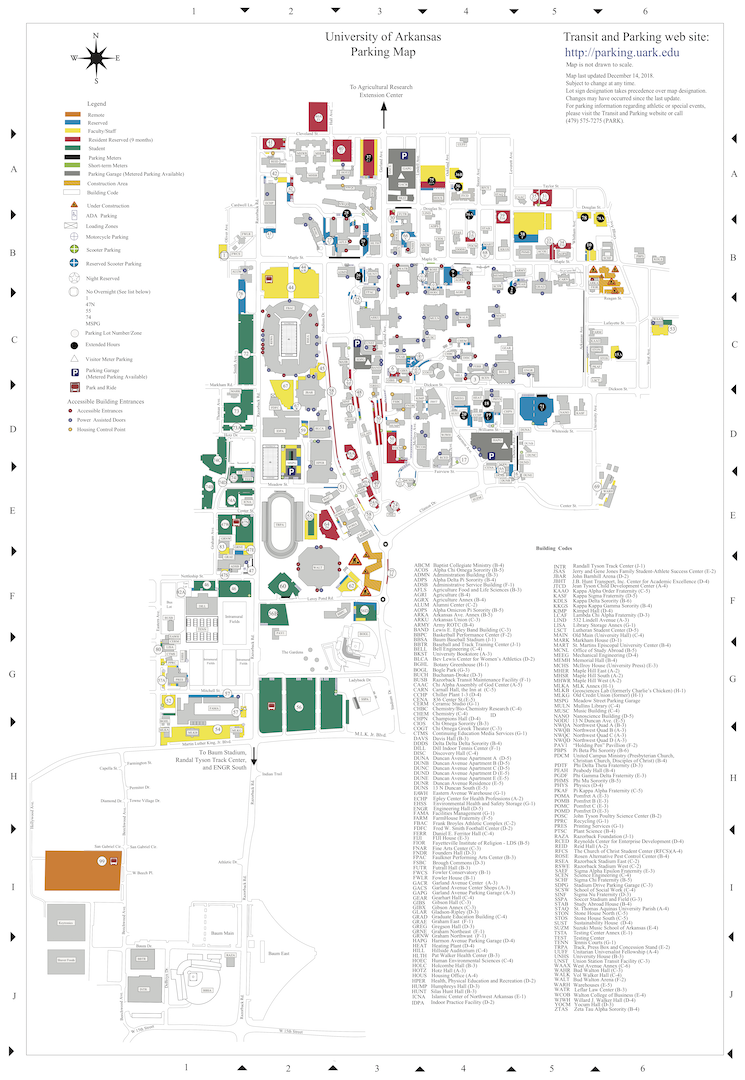
 The Arkansas federation of the American Federation of Labor and Congress of Industrial Organizations (AFL-CIO) has announced after research and deliberation its endorsements in races of the November 2018 general election.
